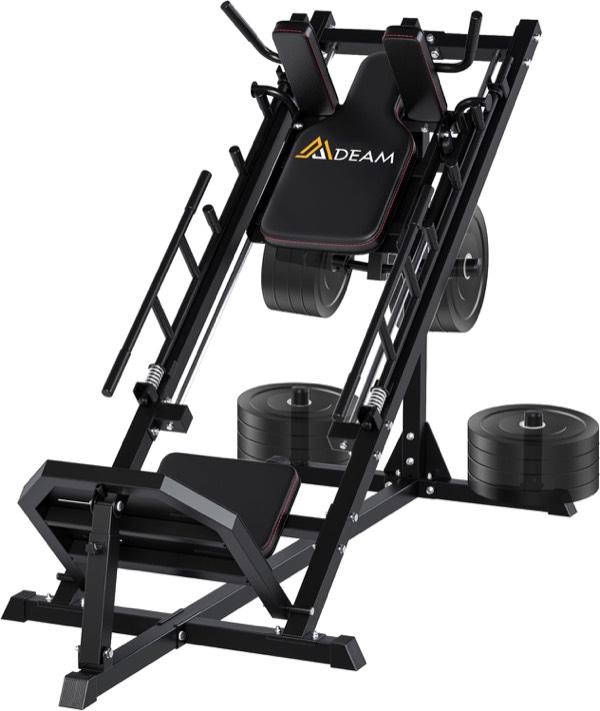
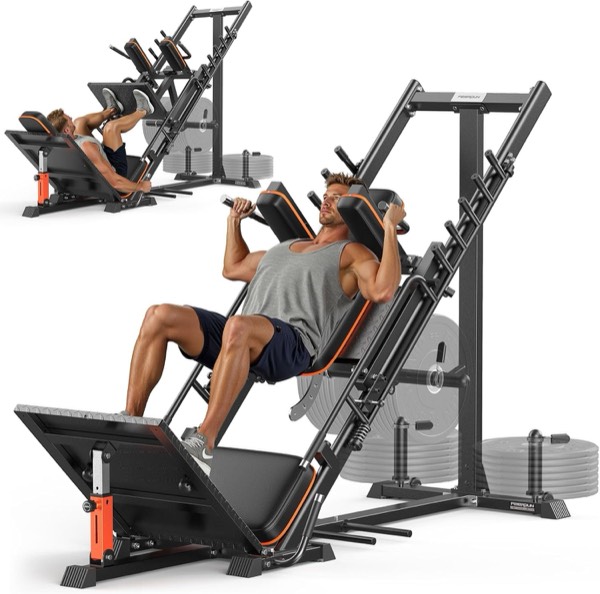
Compare the top-rated hack squat machines for your home gym. Expert picks, real reviews, and the best prices.
View Top PicksEffectively targets your quadriceps, hamstrings, and glutes with precise, controlled movement patterns.
The guided sled path takes pressure off your lower back, letting you train legs without spinal compression.
Safely load heavier weights with proper form. Perfect for pushing through plateaus and building real strength.
From beginners learning proper squat mechanics to advanced lifters chasing PRs — the machine adapts to you.
Builds functional strength and stability across your entire lower body for better athletic performance.
Modern hack squat machines are designed to fit in home gym spaces while delivering commercial-grade performance.
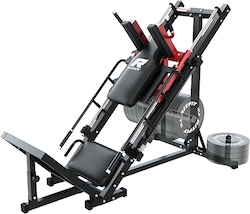
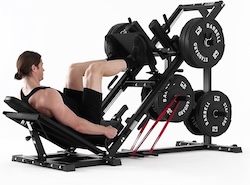
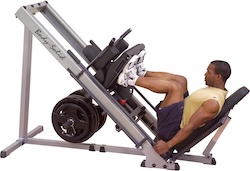
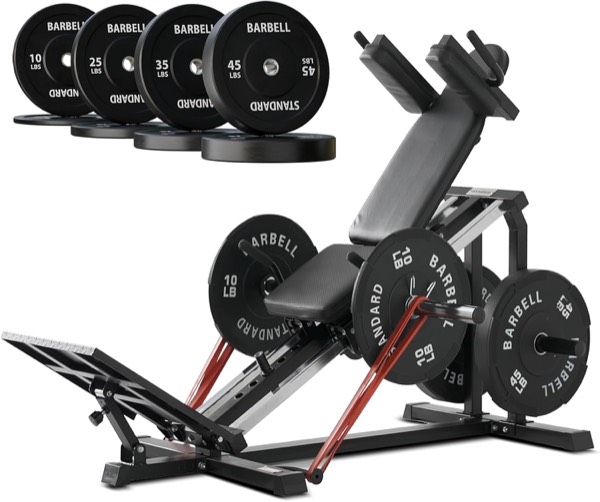
Great value for the price
Commercial grade at a great price
Top of the line from a trusted brand
Space-saving powerhouse with a unique angle
Serious weight capacity at a budget-friendly price
True 3-in-1 versatility with an 1,800 lb capacity
"I've seen incredible gains in my leg strength since I started using the hack squat machine. It's a game-changer!"
"As someone with lower back issues, the hack squat machine allows me to train my legs without pain. Highly recommended!"
Yes, hack squat machines are great for beginners as they provide guidance and support, helping you maintain proper form throughout the movement.
For optimal results, incorporate hack squats into your leg workouts 1-2 times per week, allowing for adequate recovery between sessions.
While hack squats are an excellent exercise, it's best to use them in combination with traditional squats for a well-rounded lower body workout.
A hack squat positions you at an angle with your back against a pad and feet on a platform, emphasizing your quads. A leg press has you seated and pushing weight away with your feet. Hack squats more closely mimic a standing squat pattern and tend to activate the quads more intensely, while leg presses allow for heavier loads with less core engagement. Many machines offer both functions in one unit.
The hack squat primarily targets the quadriceps, with significant activation of the glutes and hamstrings. Your calves, core, and hip adductors also work as stabilizers. You can shift emphasis by adjusting your foot placement — a higher foot position targets the glutes and hamstrings more, while a lower position isolates the quads.
Most hack squat machines require roughly 6–7 feet of length and 4–5 feet of width, plus clearance space around the machine for safe entry and exit. Compact models like the Mikolo LP10 can fit in as little as 24 square feet. Measure your space carefully and check the machine's assembled dimensions before purchasing.
If leg development is a priority, a hack squat machine is one of the best investments for a home gym. It lets you train heavy with less injury risk than free weight squats, doesn't require a spotter, and many models double as a leg press — giving you two machines in one. For most lifters, it's more versatile than a Smith machine for lower body work.
Start with just the sled (no added plates) to learn the movement pattern and range of motion. The sled itself typically weighs 40–75 lbs depending on the machine. Once you're comfortable with form, add weight in small increments. Most beginners work up to 90–135 lbs total within their first few weeks.
Focus on weight capacity (at least 800 lbs for serious lifters), build quality (heavy-gauge steel frame), smooth sled movement (linear bearings are best), adjustability (backrest and footplate positions), and safety locks. If space is limited, look for a combo unit that offers both hack squat and leg press functionality.
Find the perfect hack squat machine for your goals and budget.
Shop Top Picks